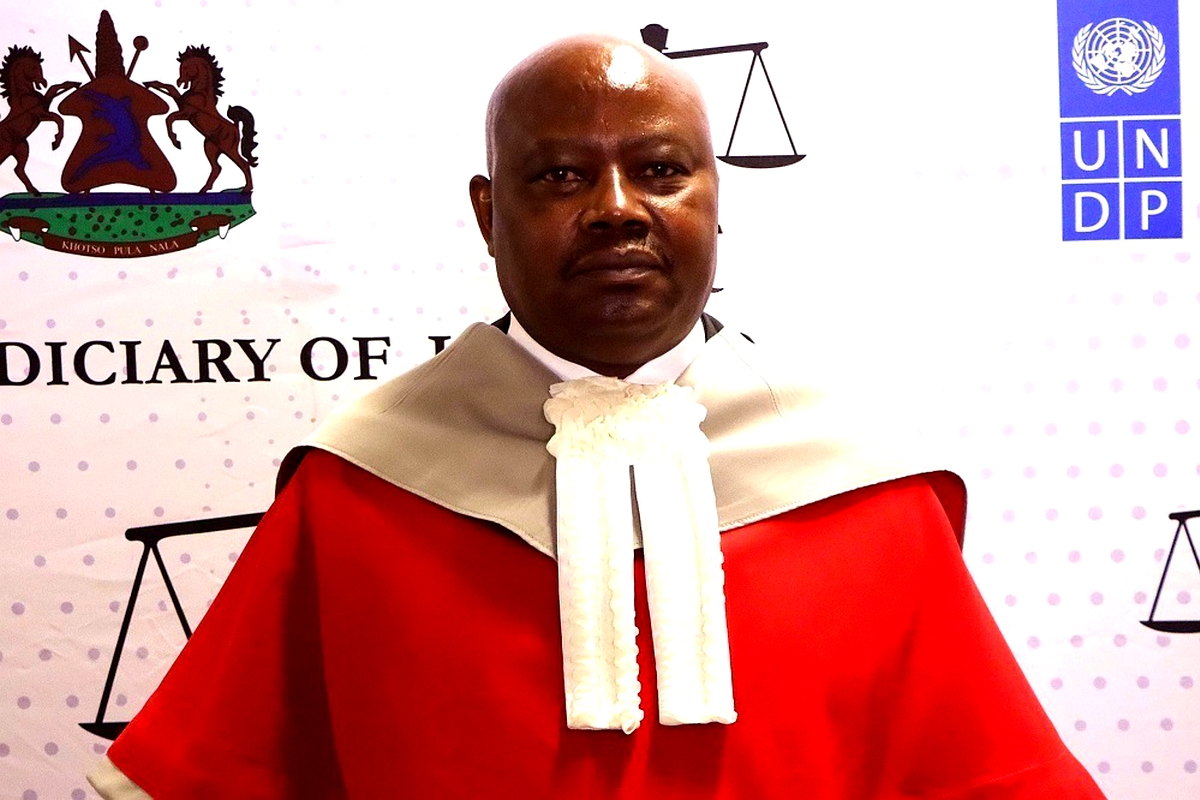
Bar exam delays frustrate law graduates

SHARE THIS PAGE!
Some law graduates say they are unable to secure meaningful employment because they have not been able to sit for Bar Practical Examinations administered by the Law Society of Lesotho.
They accuse the regulatory body of delaying to set dates for the exams and not providing any information regarding this.
Mostly affected are National University of Lesotho (NUL) Bachelor of Laws (LLB) 2025 graduates. However, this publication learnt this week that also included are several who graduated from the same institution years ago but have not been able to get jobs.
They said that for months, they have lined up outside the Law Society of Lesotho’s offices full of hope and confidence, only to leave with the same answer; no date, no notice, no clarity.
The disgruntled graduates said while registration for the exam remains open both online and physically, there is still no confirmed date from the Society when it will be written.
“Anyone who has law qualifications and wants to practise must write the bar exam on a date set by the Law Society,” a fuming graduate said in an interview this week.
Unlike the NUL class of 2024 which was notified in November that their bar exams would take place in February 2025, this cohort says they have not received any communication from the Law Society.
“The graduates of 2024 knew in November that they would be writing in February, only three months away. They were given time to register and prepare. With us, there has not been any date or notice,” another graduate noted in a separate interview.
The bar examination requirement was recently introduced following a directive by Chief Justice Sakoane Sakoane.
Previously, graduates could petition the High Court directly for admission to practice as advocates. Now, passing the bar exam is compulsory before one can apply to the High Court for admission.
Graduates insist they are not disputing the introduction of the exams themselves, but what they rather see as poor administration by the Law Society because staff at the organisation cannot even given them estimate dates so that they can prepare.
Without admission by the Society, lawyers do not have the right to represent clients in the High Court, Magistrate Courts or any other courts of law, with the exception of the Directorate of Dispute Prevention and Resolution.
“Most law firms prefer graduates who are already admitted and able to go to court. When we apply for jobs, one of the requirements is being admitted,” a 2025 graduate said.
The graduates said they were idling at home and have no job, while some do not even have any money to undergo such examinations. The bar exam is M2 000.
In cases where they are employed, their work is only limited to research and administration since they cannot appear in court.
“As a result, we earn very little since we do not bring much value to our employers. We are unable to represent clients in court. Hence we say we are lawyers by profession and not by practice.”
The graduates accuse the Law Society of indirectly contributing to the rate of unemployment in the country due to delays in administering bar exams.
Sources told this publication that examiners for the previous examination were not paid their dues hence no dates have been set or the 2025 class.
Prominent lawyer, Advocate Fusi Sehapi has also criticised the silence surrounding the matter.
“It is not right that the Law Society is quiet,” Sehapi said.
He noted he had heard that graduates were now required to write bar exams but questioned the legal foundation of the requirement, citing, “It does not appear in the law.”
Sehapi further raised concerns about the implications of the examinations. “If the bar exam is the one that tests the legal capability of someone, what happens when they fail?” he asked.
He also suggested that not all graduates may be willing to sit for the examination.
“Some people may not want to write the examination, and the Law Society will have disappointed them,” he added, implying that the process may be discouraging or frustrating aspiring legal practitioners.
Another legal practitioner, Advocate Letuka Molati said it is not proper to subject new graduates in Lesotho to write bar examinations.
He indicated that those who were admitted as advocates between 1983 to 2023 never sat for the exam.
Adv Molati explained before this new requirement, law students did six years intensive legal training followed by automatic admission as advocates.
“They got on the job practical training. The reduction from six years to five years for the LLB programme did not change anything because in other countries LLB is taken over a period of four years.
“To make the graduates seek places for pupillage in a poor economic set up like Lesotho has, to a large extent, contributed to making the legal profession a domain of those who come from well-to-do families,” he stated.
He added that prohibiting people from having on the job training has dealt a serious blow to those come from needy families.
In short, they are not given the chance because they are seen more as liability than people who can contribute anything, he argued.
“The best that could have been done is to reduce the LLB programme by six months and dedicate those months for on the job training still covered by the government bursary scheme, so that people are not disadvantaged by the families’ backgrounds,” he pointed out.
Adv Molati indicated that advocates are governed by two laws; The Law Society Act 1983 and The Legal Practitioner Act of 1983, which is applicable on bar exams.
In the past, the lawyers who got admitted between 1983 up to 2023 were not required to write bar exams. However, he said while it is lawful to require the exam, it is the Society’s failure to do their work in administering this that was worrisome.
Adv Molati said graduates can petition the council of the Law Society to force it to run the bar exams.
In response, the President of the Law Society, Lintle Tuke, told this publication that it is important to clarify that the law requires law graduates to sit for Bar Practical Examinations, with deliberate emphasis on the word ‘practical’.
He said the clear legislative intention is that these examinations must test practical legal competence acquired beyond the classroom, through exposure to real legal practice.
Adv Tuke said accordingly, graduates are expected to apply for placement in law firms and advocates’ chambers prior to sitting for the examinations.
“The Bar Practical Examinations are conducted once per annum, and it is worth noting that a full year has not yet lapsed between the last examinations and the upcoming sitting. There is therefore no legal or procedural “hold-up” as alleged,” he told theReporter in an interview yesterday.
He also explained that the Law Society of Lesotho is on track and operating within the prescribed timeframe to facilitate the next examinations.
“Preparatory processes are ongoing, and communication will be made through the appropriate and established channels at the appropriate time.
“There is neither delay nor deviation from past practice or from the law governing admission into the profession,” he pointed out.
The Law Society of Lesotho is a not-for-profit statutory body, established by law to regulate the legal profession.
Those serving on its various structures are generally doing so on an unpaid volunteering basis. Be that as it may, it is necessary to place it on record that the Law Society does not owe any examiner or service provider in relation to the Bar Examinations or any other service, he said.
“We therefore, encourage all stakeholders, including prospective candidates, to rely on verified information issued directly by the Law Society,” Adv Tuke added.


Bar exam delays frustrate law graduates
4 days ago


Golf event to raise funds for education
6 days ago
Lesotho marks World Epilepsy Day
6 days ago
Basotho students off to UAE
7 days ago
Wife demands all assets in divorce dispute
7 days ago