
Basotho migrants in peril
SHARE THIS PAGE!
Basotho migrant workers in South Africa face growing uncertainty following a warning by Cyril Ramaphosa that his government will intensify a crackdown on undocumented foreign nationals.
Ramaphosa has also indicated that employers who hire foreign nationals without valid work visas would face prosecution.
Delivering his State of the Nation Address (SONA) last week, he announced plans to recruit 10,000 additional labour inspectors this year to strengthen enforcement of immigration and labour laws.
Funding would be prioritised to reinforce border security through improved infrastructure, technology and personnel, with key border posts to be redeveloped through public-private partnerships, he said.
While Ramaphosa stressed that fundamental human rights would be upheld and that no foreign national should be unlawfully denied access to schools or health facilities, his remarks have sent shockwaves through thousands of Basotho migrants in the neighbouring country — many of whom lack valid documentation.
Thousands of Basotho work in South Africa’s farms, factories, mines and households, often without work visas. Access to passports and other travel documents remains slow and costly, forcing many to rely on informal channels to secure employment across the border.
In October last year, South Africa extended the Lesotho Exemption Permits (LEP) by 18 months to May 28, 2027, following arrests of undocumented Basotho factory workers in Newcastle, KwaZulu-Natal province. The permit system, introduced in 2015, allows Basotho nationals to live, work or study in South Africa under relaxed conditions while suspending deportations.
However, the Migrant Workers Association of Lesotho says the extension does little to address the plight of undocumented workers who never accessed the permits.
The association’s Executive Director, Lerato Nkhetše, accused the Lesotho government of failing to provide citizens with passports and facilitate access to work visas issued by the host country.
“Our government has the obligation to give Basotho documents so they can work legally in another country. But many remain undocumented in South Africa,” he said.
Nkhetše also criticised the lack of progress a year after the 2025 Bilateral Negotiating Committee agreement between Lesotho and South Africa, which was meant to ease movement of migrant workers.
Nkhetše indicated that Ramaphosa’s recent announcement would mostly affect many Basotho migrants who are already vulnerable to abuse and rights violations, including arbitrary arrests and denial of basic services like healthcare and education.
He urged the government to prioritise job creation and economic development to reduce migration pressures, particularly in the agriculture sector.
Nkhetše added that the government has an obligation to negotiate with its South African counterpart to facilitate movement between the two countries and ensure Basotho migrants are protected.
The association’s concerns are aptly captured by the harsh realities faced by Basotho migrants, who are often forced to seek informal jobs in South Africa due to Lesotho’s alarming unemployment rate in the face of the country’s ailing clothing and textile industry.
Lesotho’s high unemployment rate continues to drive migration. Recent figures show that about 39 percent — roughly 300,000 people aged between 15 and 35 — are unemployed, while an estimated 227,000 young people have stopped looking for work altogether.
With limited job opportunities at home and a struggling textile industry, many Basotho seek informal work in South Africa, leaving them vulnerable to exploitation, arbitrary arrests and possible deportation to facilities such as Lindela Holding Centre.
Nkhetše warned that heightened enforcement could further victimise an already vulnerable population.
“This announcement will mostly affect Basotho who are already exposed to abuse and rights violations,” he said, urging government to prioritise job creation, particularly in agriculture, to reduce migration pressures.
For the 2026/27 financial year, Lesotho has allocated M124.3 million towards youth development and empowerment initiatives across the country.
Presenting the national budget on Wedneday this week, Finance and Development Planning Minister, Dr Retšelisitsoe Matlanyane, said government has rolled out a Power Hub initiative, in partnership with development partners, to establish youth innovation centres starting in Berea and Quthing districts.
The hubs will offer market-aligned training in digital coding, agro-processing and high-end textiles.
“When this government declared youth unemployment a National State of Disaster in July 2025, it was a recognition that we cannot build a stable future while our most energetic asset, our youth, remain on the sidelines,” she said.
Despite these measures, migrant advocates insist that without urgent reforms to documentation systems and stronger bilateral engagement with South Africa, thousands of Basotho workers crossing through borders such as Maseru Bridge will remain at risk of arrest, deportation and exploitation.
Matala Local Court dismisses divorce application
13 days ago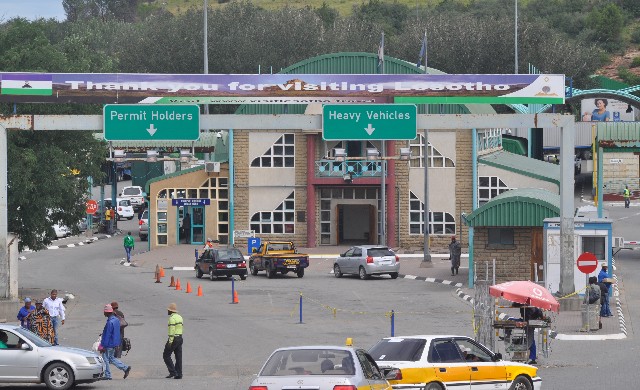
Basotho migrants in peril
13 days ago
Bloated public sector wage bill unsustainable
13 days ago
Govt moves to flash out ghost pensioners
16 days ago
Lucky ETL customer wins Toyota Starlet
16 days ago
Media to get training on trade reporting
17 days ago
World Bank drives jobs, resilience, and growth
17 days ago

Moabi launches record label
17 days ago
Career expo guides future leaders
18 days ago