
Justice Sakoane warns against judiciary corruption

SHARE THIS PAGE!
Chief Justice Sakoane Sakoane has condemned corruption and unethical conduct within the country’s judiciary, saying these vices lead to loss of public confidence in the courts.
Whether proven or perceived, allegations of corruption and unethical conduct corrode trust and diminish the moral authority of the judiciary, he noted.
Justice Sakoane made these remarks during a ceremony this week to mark the commencement of the 2025/26 judicial year.
“Corruption is not only a crime. It is a betrayal of the judicial oath of and subversion of justice. As the head of this judiciary, I will not shield wrongdoing,” he warned.
He pointed out that mechanisms for accountability and discipline exist in the Constitution of Codes of Ethics and these would be applied without fear or favour.
Quoting from the Bible, Justice Sakoane said integrity is not optional, but it is a corner-stone for a fair, clean and transparent judiciary that God commanded Moses to establish in Deuteronomy Chapter 16, verses 18 to 20.
He also cautioned against unsubstantiated attacks on judiciary officers, aimed at influencing court outcomes or undermining decisions.
He further indicated that Lesotho’s justice system is faced with many challenges that include congested court rolls, delays, and procedural inefficiencies whose combination denied litigants timely solution of disputes.
Such challenges have real human consequences as victims of crime wait for closure and accused persons remain in prison for long periods awaiting trials, businesses collapse and witnesses die.
Justice Sakoane said to address these issues, the judiciary has embarked on targeted reforms including the introduction of new court rules to streamline procedures, curb unnecessary interlocutory application, and promote judicial efficiency.
The rules are not cosmetic but intended to change legal culture, promote discipline among judicial officers and legal practitioners by introducing case-management processes in which offices chart the course.
“Judicial independence and accountability are non-negotiable. Judicial officers must be free to decide matters without interference from political actors, economic interest, or popular pressure. The judicial should be beholden to public and private interests,” Justice Sakoane explained.
He also expressed concern over the huge backlog of cases, saying this could only be overcome by increasing the number of judicial officers and strengthening institutions that deliver justice.
He noted that delayed judgements weaken public confidence in the judiciary system. “The flip side of judicial independence is accountability to litigants by delivery of rulings and judgements on time. Judges and magistrates account only through their judgements that are clear, reasoned, timely and anchored in law. Delayed judgements weaken public confidence in the judiciary system and bring the judiciary into disrepute. Disciplinary measures are therefore, appropriate and necessary to ensure judicial accountability.”
Justice Sakoane emphasised the need to protect victims of crime, as delays in criminal proceedings have real human consequences, including prolonged detention of accused persons and suffering for victims.
The efficiency of courts in delivering justice is measured by effectiveness in handling cases with reasonable speed without sacrificing fairness and quality in the process, he said.
He revealed that 106 cases were registered in the Court of Appeal in 2025. Ninety-eight were allocated and 86 were completed. A total of 12 cases from both sessions were postponed because of incomplete records and at the request of the parties. None of the reasons for postponement included absence of written judgements by judges of the High Court. This shows that judgements are being delivered in compliance with the 90-day rule, Justice Sakoane added.
In the High Court Main Division, 1474 cases were registered, 563 were allocated and 1090 were completed. In the Labour Appeal, 46 case were registered, 20 allocated and five completed. In the Land Court 47 were registered, 31 allocated and 33 completed. In the Commercial Court, 612 cases were registered, 112 allocated and 718 completed.
In the Northern Division, 525 cases were registered, 84 allocated and 293 completed.
Justice Sakoane observed that there is a notable increase in the number of civil cases completed in the High Court. Contributing factors include effective case-management, as 369 judgements were delivered.
He called for the enactment of laws to compensate victims of crime in line with international standards as such measures would help restore public confidence in the criminal system.

Wife demands all assets in divorce dispute
3 days ago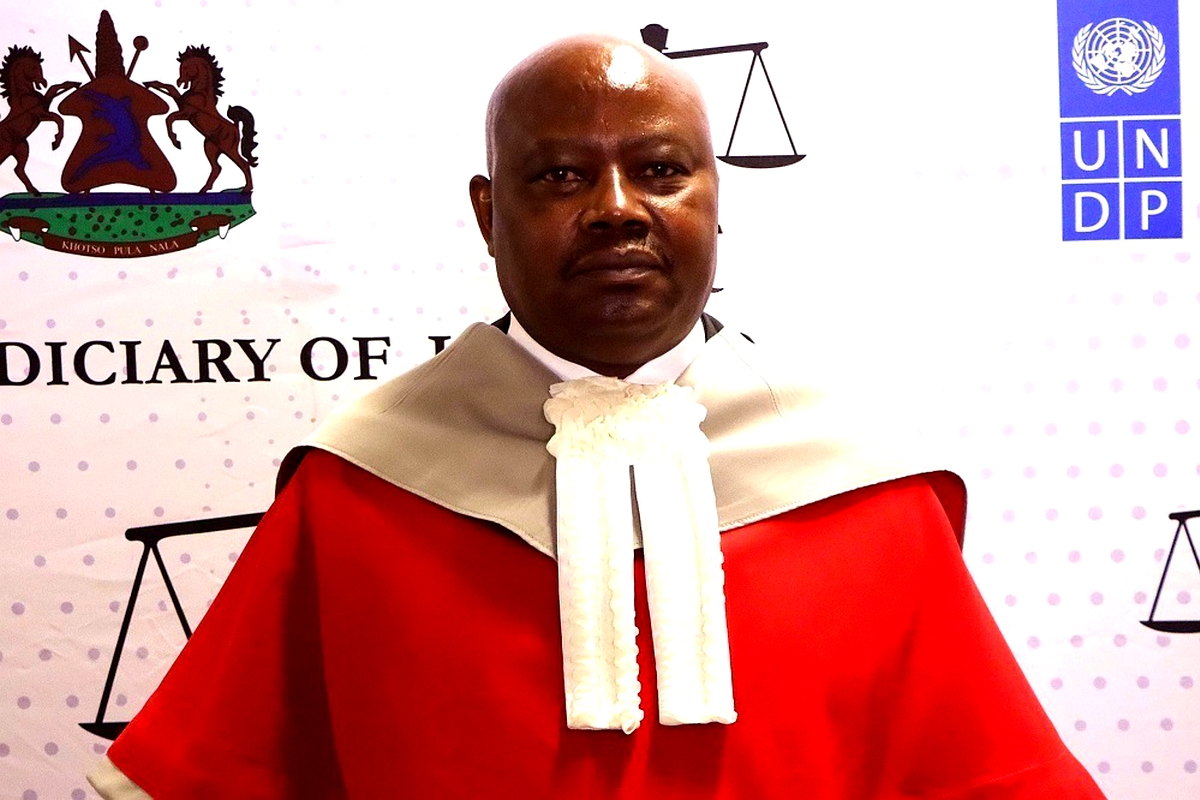



Petroleum Fund seeks to promote safety
5 days ago
Sentebale hosts free movie day for children
7 days ago
LPPA to hold public procurement workshop
9 days ago
NHTC gets shot in the arm
9 days ago