
Lesotho revamps internet exchange infrastructure

SHARE THIS PAGE!
The Internet Society Lesotho Chapter (ISOC), with the support of the Lesotho Communications Authority (LCA), has officially launched the revamped Lesotho Internet Exchange Point (LIXP).
The move is aimed at strengthening the country’s internet infrastructure and improving connectivity nationwide.
The initiative brings together key stakeholders, including higher education institutions, government departments, banks, and internet service providers, to enhance exchange point.
An Internet Exchange Point (IXP) is essentially a physical location where different networks meet to exchange internet traffic directly. Instead of routing data through long and costly international paths, networks connected to an IXP can exchange local traffic within the same country or region. This direct exchange reduces latency, lowers operational costs, and significantly improves internet speed and reliability for users.
The lead project coordinator of LIXP, Monaheng Diaho, said with the revamp of the facility, Lesotho stands to benefit from improved local traffic routing, thereby contributing to economic development.
Diaho said local businesses will be able to host content within the country, reducing costs associated with international bandwidth while improving the quality of service for customers.
Increased peering opportunities will allow internet service providers to connect directly with content providers, reducing reliance on international transit providers and creating a more sustainable internet ecosystem.
“The exchange point itself was not entirely new, but rather undergoing a necessary transformation,” he noted.
Diaho also revealed that LIXP had existed previously, but the infrastructure, including furniture and equipment acquired in 2011, had become outdated.
“At the time, the exchange point was housed at the LCA, which remains its custodian,” he indicated.
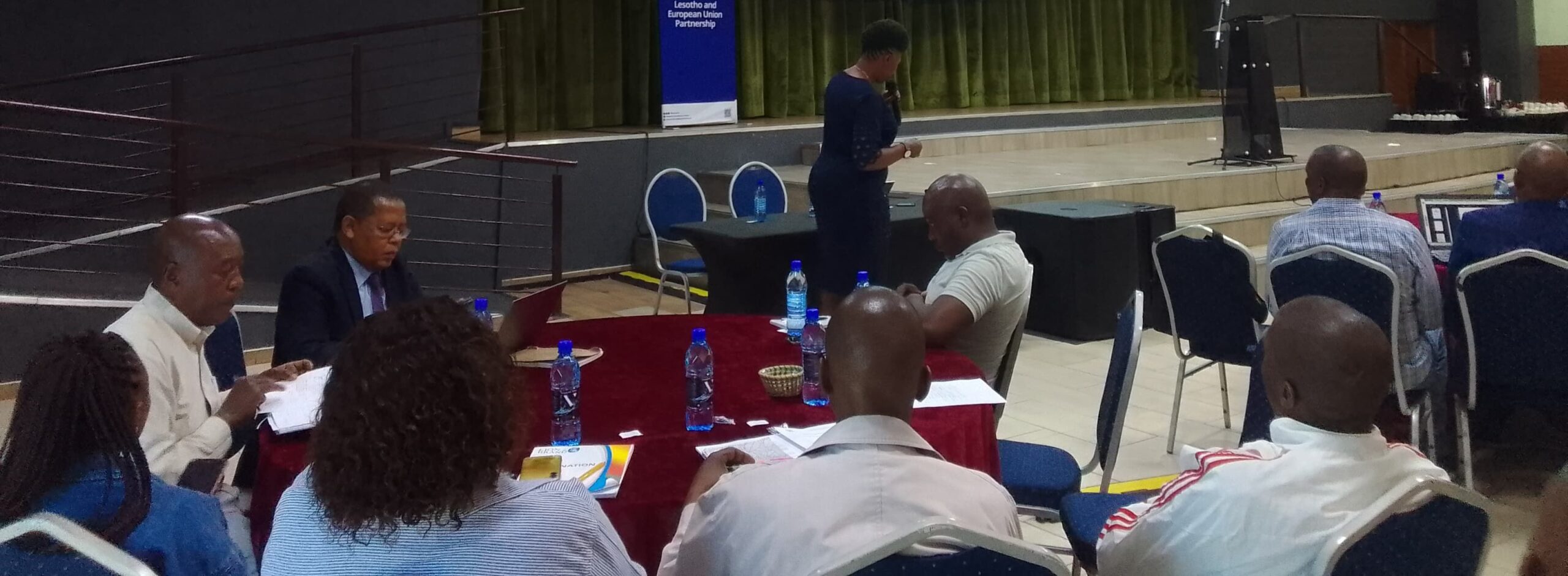
Diaho shared these insights during the Lesotho IXP Peering Community Meeting this week where stakeholders discussed strategies to strengthen collaboration and maximise the impact of the exchange point.
Itumeleng Mokhachane, a lecturer in Information Technology at Limkokwing University of Creative Technology, highlighted the persistent challenges of slow internet connectivity faced by institutions of higher learning.
She said that if LIXP is successfully implemented and deployed correctly, it would be a major gain for universities, students, and other institutions that rely heavily on digital platforms.
Mokhachane explained that improved connectivity would allow institutions to fully utilise learning management systems without constantly blaming slow internet speeds.
“Lecturers would be able to move away from hybrid models that mix online and physical learning due to connectivity challenges, and instead adopt blended and fully online learning approaches.
“For people who work, we will also teach students online without any problem of connectivity,” she said.
Speaking on behalf of the LCA, Limpho Ramollo, provided historical context to the project.
Ramollo explained that LIXP was first established in 2011 by the Internet Exchange Point of Lesotho, but operations later stopped and resumed in 2016 at the LCA headquarters.
According to Ramollo, the LCA currently hosts five Internet Service Providers and two Content Delivery Networks (CDNs).
“The primary goal of the current project is to integrate newly acquired Ubiquiti devices, including two USW-Pro switches and two EdgeRouter Infinity routers, into the existing LIXP network.
“The purpose of this integration is to address current network bottlenecks and improve overall exchange point performance,” Ramollo added.
LPPA to hold public procurement workshop
6 days ago
NHTC gets shot in the arm
6 days ago
CHE to host higher education fair
8 days ago
Man fined M1,000 for making threats
8 days ago

Power project to create over 400 jobs
8 days ago
Agriculture ministry under fire
8 days ago
MAMA project changing lives in rural Lesotho
8 days ago

Sesotho film selected for Joburg festival
8 days ago