
Lesotho, SA hail LHWP ll progress

SHARE THIS PAGE!
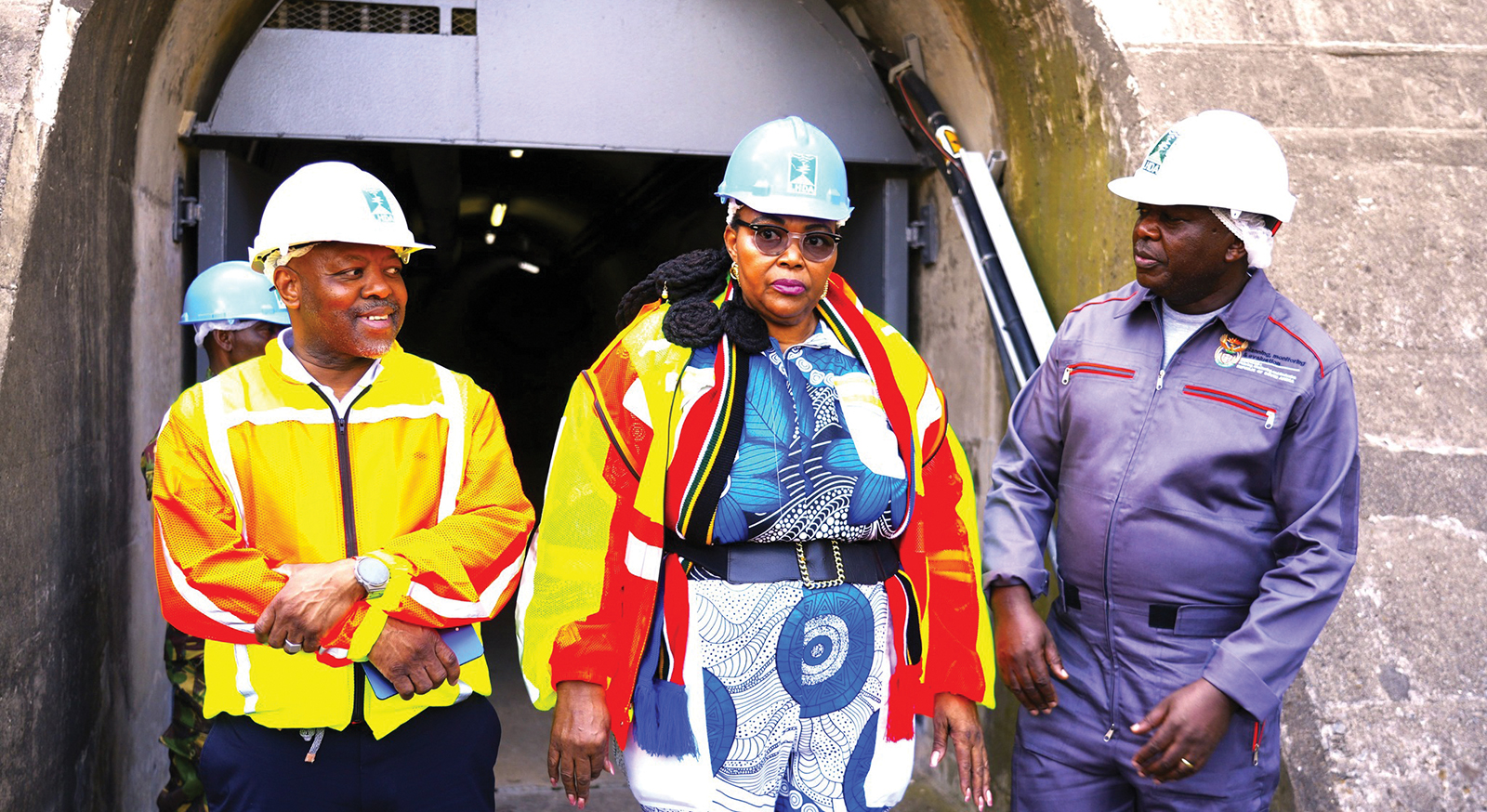
Lesotho and South Africa have noted significant progress on the multi-billion maloti Lesotho Highlands Water Project (LHWP) Phase II project, including work on the Senqu Bridge, which is set to be operation within the next two months.
The M2 billion 825-metre Senqu Bridge, a major component of Phase II, is now 93 percent complete, while the Mabunyaneng and Khubelu bridges are 67 percent done.
The LHWP is multi-billion Maloti/Rand bi-national initiative between the governments of the Kingdom of Lesotho and the Republic of South Africa, comprising water transfer and hydropower generation and ancillary developments.
Natural Resources Minister, Mohlomi Moleko, this week described the project as one of the most important infrastructure developments on the continent.
“It is one of the biggest projects in Africa, if not the world, when you consider Phase I and Phase II,” Moleko said during a tour to assess the project’s progress.
He outlined the project’s core objectives which include provision of water to Gauteng and its industries; and development of hydropower stations, irrigation systems, tourism activities, and fisheries expansion in Lesotho.
“The project has already built three lodges Mohale, Katse and Polihali. We want to further expand fisheries and other income-generating activities, as the project is central to the economic upliftment of Basotho,” he said.
While acknowledging that some aspects of the work have been slow, Moleko stressed the importance of regular oversight and follow-up to keep the project on track.
He said although construction of tunnels and dams is progressing well, delays remain a concern as more funds would be needed to complete the project.
Lesotho currently receives M350 million in water royalties from South Africa every month, in addition to M10 billion allocated for tunnels, dams, housing, farming, bee projects and other LHDA-related activities. The LHWP ll has generated over M20 billion for Lesotho since its inception in 2019.
Royalties are expected to increase significantly by the time the project is completed in 2029.
“The funds will enable us to develop quickly. We will be able to build schools, roads and clinics,” Moleko added.
Speaking during same tour, SA Water and Sanitation Minister, Pamela Majodina, expressed satisfaction with progress made on the bridge and related infrastructure projects, describing the initiative as a critical driver of development for both countries.
Majodina said the governments of SA and Lesotho remain committed to advance regional water security and infrastructure development. The tour follows her visit in August 2025, to monitor and review the implementation of the giant project.
She noted that although they were impressed with the progress attained so far, the two government are concerned about delays in some areas of the project.
Majodina acknowledged that the relocation of affected households had taken longer than initially expected, but reassured stakeholders that a clear plan is in place.
A total of 24 households have already been relocated, while 105 houses were under construction. These are part of the close to 300 households expected to be relocated in the near future.
Beyond infrastructure gains, 92 professionals have been trained through the project, creating a pool of skilled individuals who will contribute to future initiatives.
“The project has created approximately 16,000 jobs, which is a massive contribution, although it is still insufficient given the high levels of poverty and unemployment in both countries,” she pointed out.
Majodina stated that preparations were underway to ensure that municipalities in the neighbouring country are ready to receive the expected increased water supply.
“South Africa is going to get more water, and we are preparing municipalities to build reservoirs and stop leakages so that when the water comes in large volumes, they are able to manage it properly.”
SA Rand Water was already involved as a key beneficiary but there was need to extend benefits further to local communities, she said.
The department noted that communities in the Free State, as well as those living close to the dam, had raised concerns that water passes through their areas without directly benefiting them. It vowed to address this short coming.
SA Deputy Minister of Planning, Monitoring and Evaluation, Seiso Mohai, congratulated the two governments for exercising strong political leadership over what he described as a “world-class project”.
Mohai noted that water resources were crucial to South Africa’s National Development Plan.
“This investment is important because it strengthens collaboration between our two countries and demonstrates shared leadership in delivering large-scale projects,” he said.
He added that the project has opened doors for young professionals to gain experience from start to finish, with some of the country’s leading engineers having been involved since Phase I, a legacy that will continue to shape the region’s development for generations to come.
Chief Executive officer of Lesotho Highlands Development Authority, Tente Tente, said Polihali Dam is 40 percent complete and the Transfer Tunnel 48 percent done.
Lesotho, SA hail LHWP ll progress
a month ago
Govt collects M6 million plastic levy
a month ago
MPs face backlash over salary hike
a month ago
NGO leads efforts to keep environment clean
a month ago


Ministers visit Katse Dam
a month ago
CBL releases upgraded currency
a month ago
Ministers assess LHWP II progress
a month ago
ETL gives to the elderly
a month ago