
NGOs take on Law Society
SHARE THIS PAGE!
A highly contentious case is brewing in the High Court over a decision by the Law Society to withdraw accreditation for lawyers employed by non-governmental organisations (NGOs).
The Law Society, as statutory regulator of the legal profession in the country, has also decided to stop issuing practising certificates to such lawyers.
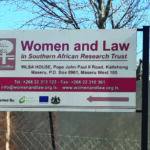
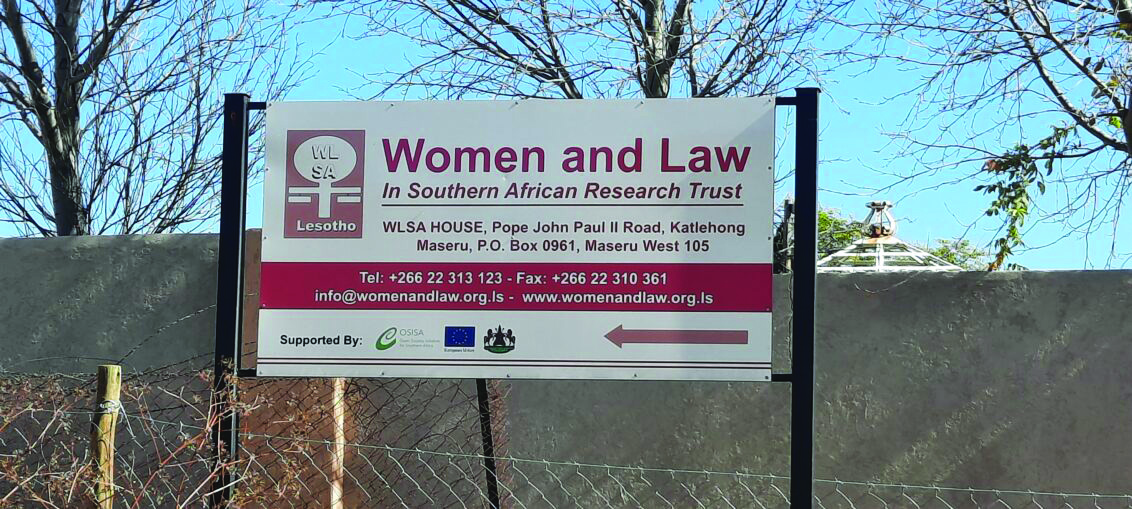
Not satisfied with this, two local NGOs – Women and Law in Southern African Research Trust Lesotho (WLSA) and Seinoli Legal Centre – together with Advocate Bataung Ntoko, have rushed to the High Court pleading with it to review and set aside the Law Society’s decisions.
In an application filed by their lawyer Attorney Monaheng Rasekoai, the three applicants want the court to compel the Law Society to dispatch a full record of proceedings relating to the revocation of WLSA’s accreditation.
They also want the court to review and set aside the withdrawal of accreditation and refusal to issue practising certificates to lawyers employed by human rights organisations.
The applicants further pray that the court declares that duly admitted legal practitioners employed by NGOs are entitled to practise law and represent clients in court. Failure to do that would effectively silence them and denying justice to those who need it most.
Alternatively, the court should declare the impugned portion of section 7(3) of the Law Society Act unconstitutional to the extent that it excludes such practitioners, and order the issuance of practising certificates upon payment of the requisite fees.
The Law Society of Lesotho, the Minister of Justice and Law, Richard Ramoeletsi and Attorney General, Advocate Rapelang Motsieloa (principal legal adviser to the government) are cited as respondents in the case.
The respondents have been given until today to notify the applicants or their legal representatives in writing if they intend to oppose the application.
In no such notice of intention to oppose is given, the applicants will request the Registrar of the High Court to place the matter before the presiding judge to be dealt with under rule 87(10).
The applicants argue that the Law Society’s actions are arbitrary, irrational, and unconstitutional. The actions, they added, breach the fundamental rights of equality before the law and access to justice.
Tensions reportedly flared after WLSA submitted a list of its admitted legal practitioners to the Law Society for renewal of their practising certificates. This request was reportedly turned down by the Society.
The applicants contend that, following a complaint, the Law Society’s attitude towards WLSA “changed drastically,” culminating in the withdrawal of its accreditation and refusal to renew or issue practising certificates to its lawyers.
In its submission, WLSA alleges that these steps were taken without affording it or its legal practitioners a ‘proper’ hearing.
The organisation further stated that requests for procedural fairness were dismissed on the basis that a hearing would serve no purpose as it (hearing) cannot reach any other conclusion, a position the applicants describe as deeply irregular and unlawful.
The applicants argue that the Law Society acted ultra vires (acting or done beyond one’s legal power or authority), irrationally, and in breach of basic administrative-law principles by unilaterally withdrawing accreditation and withholding practising certificates without due process.
They further argue that section 7(3) of the Law Society Act, properly interpreted, does not prohibit lawyers employed by NGOs from practising law or representing clients in court to the extent that the provision is read as excluding such lawyers on the basis that they are “not in private practice,” the applicants contend, adding this interpretation is unconstitutional.
In particular, the applicants submit, such an interpretation violates constitutional guarantees of equality before the law and equal protection, as well as the right to a fair trial.
They further point out that denying indigent persons access to NGO-provided legal representation effectively shuts the courthouse doors to those who cannot afford private lawyers.
The applicants reject suggestions that affected clients could rely on pro bono (without charge) services from private practitioners, describing such an approach as “unrealistic and inadequate”.
They submitted that private legal practitioners are concentrated in urban centres, while NGOs often operate in rural and underserved areas where legal services are already scarce.
They also argue that pro bono work is neither compulsory nor systematically regulated in a way that could substitute for structured NGO legal aid.
The applicants also argued that state-provided legal aid is under-resourced, understaffed, and overwhelmed, citing official reports acknowledging the inadequacy of legal aid provision across the country.
WLSA warns that the refusal to issue practising certificates to NGO-employed lawyers could force retrenchments, and exacerbate unemployment among law graduates.
It also has potential to dismantle one of the few functional access-to-justice mechanisms available to vulnerable communities in Lesotho, it contends.
“If this decision is allowed to stand, it will have far-reaching consequences for the most vulnerable members of our society. It will deny them access to justice and undermine the rule of law,” WLSA submitted in its affidavit.
WLSA is a human-right NGO providing free legal services, advocacy, research, and legal education, particularly to women, children, and indigent communities across Lesotho. Seinoli Legal Centre, another human-right NGO, is engaged in legal services and public-interest litigation.

Agency to host fashion week
a day ago


Ha Pita women found guilty of assault
4 days ago

Vodacom named Africa’s top employer
4 days ago
NGOs take on Law Society
4 days ago
M1.7m boost for Econet APICA
4 days ago