
Quthing stuck in educational decline
SHARE THIS PAGE!
For more than a decade, Quthing district has remained trapped in a cycle of poor academic performance, a situation education authorities now concede has become deeply entrenched.
The district once again ranked last nationally in the latest Lesotho General Certificate of Secondary Education (LGCSE) results, reigniting concerns about leadership in schools, parental involvement, language barriers and the broader social environment shaping learners’ lives.
Quthing recorded a pass rate of 39.4 percent in 2025, down from 44.94 percent in 2024, placing it at the bottom among Lesotho’s 10 districts in both years.
District Education Manager, Lebohang Kala, said the district has struggled academically since 2011, the year he assumed office.
Speaking to theReporter after the Examination Council of Lesotho (ECOL) released the results earlier this week, Kala described the situation as “frustrating and exhausting”.
“This is not a once-off result. It is a long-standing pattern of weak performance,” he said.
Following inspections across schools in the district, Kala said three major problems had been identified. The first is weak school leadership, with some principals failing to enforce accountability, resulting in teachers who do not fully commit to their duties.
The second challenge, he said, lies with parents. Kala accused many of failing to take an active interest in their children’s education, noting poor attendance at school meetings and little follow-up on learners’ progress.
The third issue is learner attitude.
“Some learners attend school merely as a formality, without placing learning at the centre of their lives,” he said.
Ironically, Kala noted, parents who prioritise education often remove their children from Quthing schools and enrol them in other districts. Even some teachers working in the district send their own children elsewhere.
In response, the district has begun establishing a broad-based student welfare committee bringing together parents, police, social development officials, chiefs, councillors and education authorities.
“We want everyone who plays a role in a child’s education to be involved,” Kala said.
He also pointed to migration as a demotivating factor, noting that many role models work in Ceres, South Africa, leaving learners with little inspiration.
Some children live in rented accommodation with minimal supervision, further affecting discipline and academic focus.
ECOL director, Ntaeboso Phenduka, confirmed that Quthing has performed poorly, particularly between 2023 and 2025.
However, he said the district has shown potential at Grade 7 level, where results have improved relative to other districts.
Phenduka identified language as a major challenge, explaining that many learners’ first languages are SiPhuthi and isiXhosa, while instruction is mainly in Sesotho and English. High-performing learners often leave the district for secondary schooling elsewhere, further weakening local results.
Community members share similar concerns. A Quthing resident, Thabang Selinyane, said language barriers lie at the heart of the crisis. “Children grow up speaking SiPhuthi or isiXhosa, yet teachers do not know these languages. The gap starts from the very beginning,” he said.
Selinyane added that parental absence, alcohol abuse and weak role modelling in some communities continue to undermine learners’ chances of success.
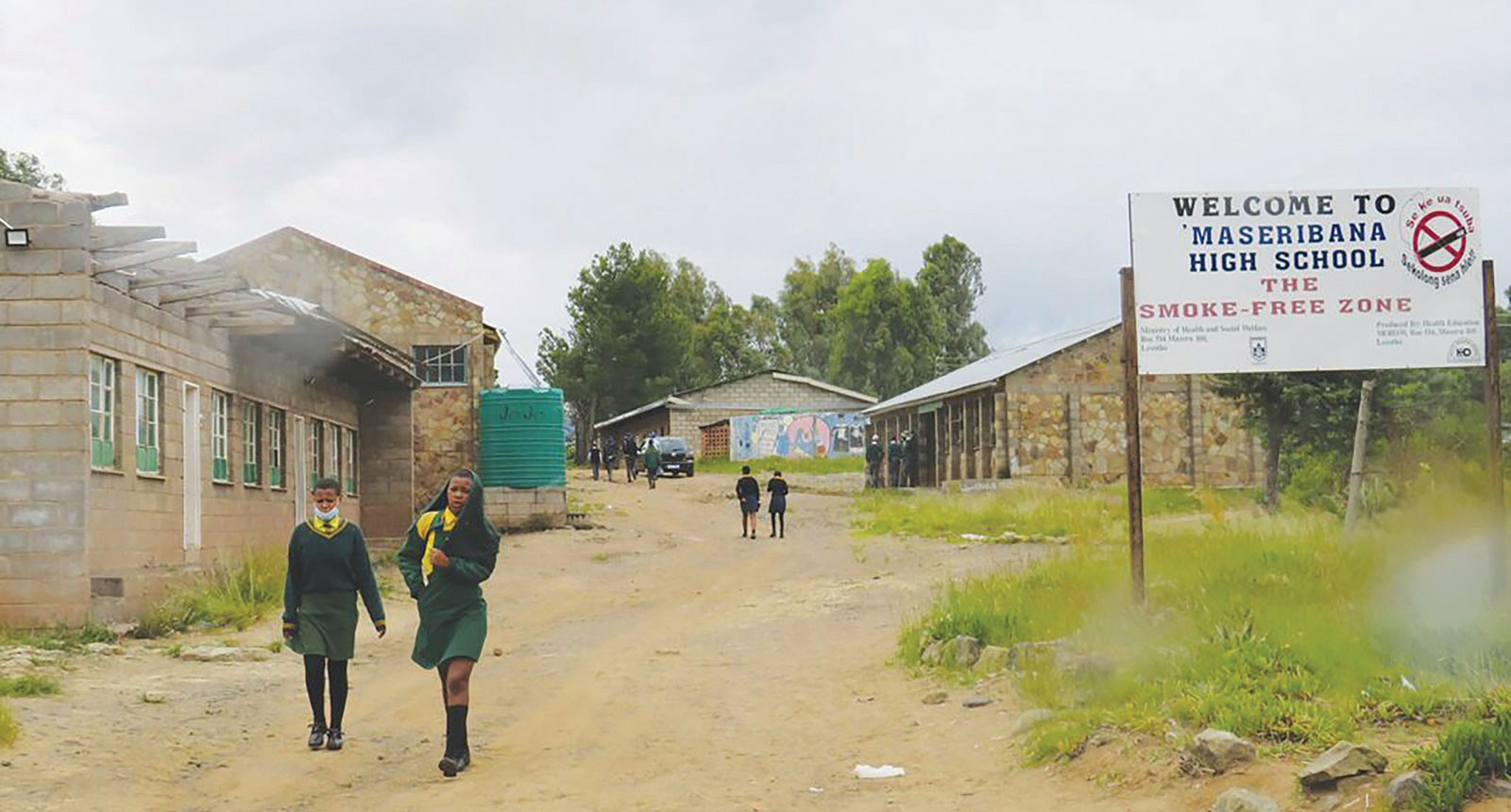
Once high-performing schools such as Moorosi High School have seen steady declines, while Maseribane and Masitise High Schools are now among the worst performers.
At Mount Moorosi-based Maseribane High School, principal Mokutu Mohale said literacy levels are alarmingly low. “Learners cannot write Sesotho or English. In science subjects, they lack basic content,” he said.
At primary level, similar challenges persist.
A teacher at Mjanyana Primary School, Thato Leemisa, last year said learners whose home language is Sethepu struggle because teaching is limited to Sesotho and English.
“They cannot read or write Sesotho, and this severely affects their performance,” she said, arguing that learners’ linguistic rights are being overlooked.
As Quthing continues to lag behind, the district’s education crisis appears rooted not in a single failure, but in a complex web of leadership gaps, social pressures and unresolved language challenges that demand urgent, coordinated intervention.
Quthing stuck in educational decline
5 days ago
DMA moves to curb hunger in Leribe
5 days ago
Vodacom Lesotho empowers youth to purse STEM
5 days ago
Lesotho confident of AGOA extension
5 days ago

Agency to host fashion week
5 days ago


Ha Pita women found guilty of assault
8 days ago