UNICEF, govt pledge to improve children’s lives
SHARE THIS PAGE!
The United Nations International Children’s Emergency Fund (UNICEF) and the government have signed a 2026 Joint Annual Workplan, reaffirming their shared commitment to improving the lives of Basotho children, adolescents, and young people.
Workplans are developed jointly with the government and partners every year to guide and agree upon key actions that will be undertaken during the year.
The plan for 2026 was signed between UNICEF and the ministries of Education and Training, Health, and Finance and Development Planning.
UNICEF representative in Lesotho, Deepak Bhaskaran, said the signing which took place on Wednesday this week reflects the strong and enduring partnership between the Government of Lesotho, UNICEF, and development partners.
It symbolises UNICEF’s shared responsibility to deliver measurable improvements in the lives of children, adolescents, and young people across the country, he noted.
Bhaskaran indicated that the workplans are not merely administrative exercises; they represent shared commitment to accelerating progress in every district and ensuring that no child is left behind.
The 2026 workplan aligns closely with national priorities and were jointly developed with all relevant ministries, departments and agencies.
“The plans are guided by a lifecycle approach which aims to support children in their first decade, empowering adolescents in their second decade, and meaningfully engaging children and youth as partners in participation, accountability, and social change while at the same time influencing socio-economic policies, budgets and development frameworks.
“The annual workplans we are signing today seek to operationalise our country strategy and are informed by UNICEF’s new global strategy (2026-2030),” he said, adding that the country strategy places the full realisation of children’s rights at the centre of the partners’ collective action.
On his part, UNICEF deputy representative, Bob Muchabaiwa, said the 2026 key actions include strengthening community health systems, improving primary health care delivery, quality of maternal, newborn and child health services, as well as accountability.
The workplan also seeks to enhance nutrition governance and multi-sectoral coordination, he noted. It further aims to boost the capacity of health workers and caregivers in their efforts to improve diet diversity for young children.
“Stunting remains a big challenge in the country and as an organisation we are elevating to do more in this area,” Muchabaiwa indicated. The 2026 annual workplans build on achievements from previous years.
The principal secretary in the Ministry of Finance and Development planning, Nthoateng Lebona, welcomed the workplan, saying it provides government with certainty regarding the support it will receive.
Basotho students off to UAE
6 days ago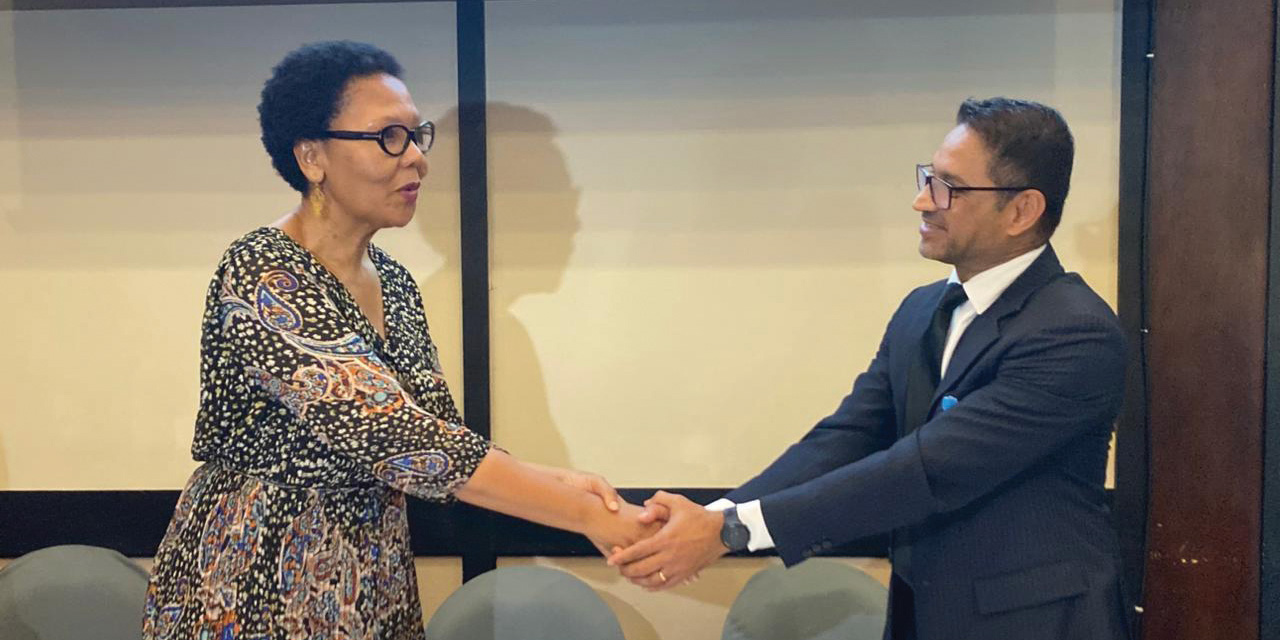
Wife demands all assets in divorce dispute
6 days ago



Petroleum Fund seeks to promote safety
7 days ago
Sentebale hosts free movie day for children
9 days ago